

SLS 3D Printing Services
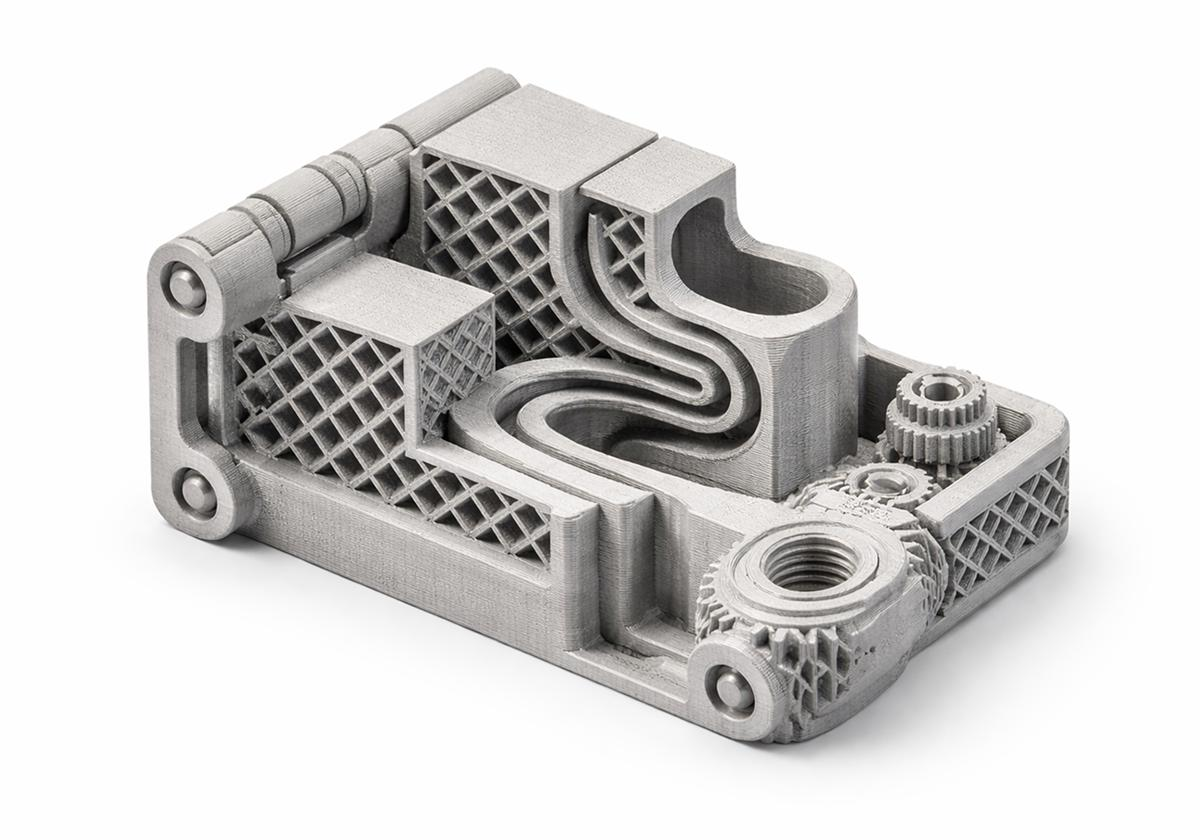
BoValley offers Selective Laser Sintering (SLS) for functional plastic prototypes and selected low-volume production parts. SLS is well suited to complex geometries, integrated features, and nylon components that need to move beyond basic visual evaluation.
Certification + Compliance
- ***
- ***
- ***
- ***

- Cavities per Mold
- ***
- Tooling Lead Times
- ***
- Molding Materials
- ***
Overview
What is Selective Laser Sintering (SLS)?
Selective Laser Sintering (SLS) is a powder-bed fusion process that uses a laser to fuse polymer powder layer by layer. Nylon materials such as PA12 and PA11 are commonly used for functional parts with complex geometries.
The surrounding unfused powder supports the part during printing, so conventional support structures are generally not required. After printing, parts are cooled, depowdered, and cleaned. Additional finishing may be available depending on the material and requirements.
Selective Laser Sintering (SLS) Capabilities
SLS does not require conventional support structures, but powder removal, minimum feature size, wall thickness, spacing between moving features, and part orientation still matter.
***
- ***
- ***
- ***
- ***
***
- ***
- ***
- ***
- ***
***
- ***
- ***
- ***
- ***
***
- ***
- ***
- ***
- ***
***
- ***
- ***
- ***
- ***
***
- ***
- ***
- ***
- ***
 Materials
SLS Materials for Functional Parts
Material availability depends on the printing system and supplier. The following categories are suitable for explaining typical SLS material options; publish only those BoValley can actually source and process.
- PA12 Nylon
- PA11 Nylon
- Glass-Filled Nylon
- Carbon-Filled Nylon
- TPU / Flexible Powder
- Specialty Nylon Grades
- Glass-Filled Nylon
- ***
- ***
- ***
- ***
- ***
- ***
- ***
- ***
- ***
- ***
- ***
- ***
- ***
- ***
- ***
- ***
- ***
Surface Finish Options
SLS parts typically have a slightly textured surface. Depending on the application, finishing may include powder cleaning, bead blasting, dyeing, or other available surface treatments.
| Parameter | Typical Capability / Options |
|---|---|
| Process | Selective Laser Sintering (SLS) |
| Material Type | Polymer powder |
| Common Materials | PA12, PA11; selected filled nylons or elastomeric materials if supported |
| Build Size | Depends on equipment and part layout |
| Dimensional Accuracy | Depends on geometry, material, build orientation, and cooling |
| Support Structures | Conventional supports generally not required |
| Surface Finish | Typically matte or slightly grainy; finishing can change appearance |
| Post-Processing | Depowdering, cleaning, blasting, dyeing or other agreed finishing |
| Typical Order Volume | Functional prototypes and selected small batches |
The Process
How Does Selective Laser Sintering (SLS) Work?
01. Design and Build Preparation: Review geometry, wall thickness, clearances, orientation, and intended function. 02. Powder-Bed Printing: Fuse polymer powder layer by layer to build the required geometry. 03. Cooling and Depowdering: Allow the build to cool, then remove loose powder from the parts and features. 04. Finishing and Inspection: Apply agreed finishing and inspect the specified dimensions and features.
The advantages
- Complex Geometry:• Supports intricate forms and integrated features that can be difficult to machine
- Functional Nylon Parts:• Suitable for selected fit, assembly, and functional design evaluations.
- No Conventional Supports:• Surrounding powder supports the build, reducing the need for conventional support structures.
The challenges
- Build Nesting Potential:• Multiple parts may be arranged in a single build, depending on geometry and process limits.
- Integrated Features:• Can combine selected features into one part and reduce assembly complexity.
 Quality
Applications for Selective Laser Sintering (SLS)
Any part family that ships together — or any single part ordered in volume — is a candidate for these tooling strategies.
Functional Prototypes
Test mechanical concepts and assembly interfaces.
Brackets & Housings
Produce custom enclosures, mounts, and structural components.
Ducts & Complex Channels
Create geometries that may be difficult to machine conventionally.
Low-Volume End-Use Parts
Make selected parts for specialized equipment and custom products.
Custom fixtures
***
Consumer product prototypes
***
| Types of Parts | Function |
|---|---|
| *** | *** |
| *** | *** |
| *** | *** |
Ready to Start Your Next Manufacturing Project?
Upload your CAD file today — get a detailed quote with DFM feedback within 24 hours.