

Family & Multi-Cavity Injection Molding
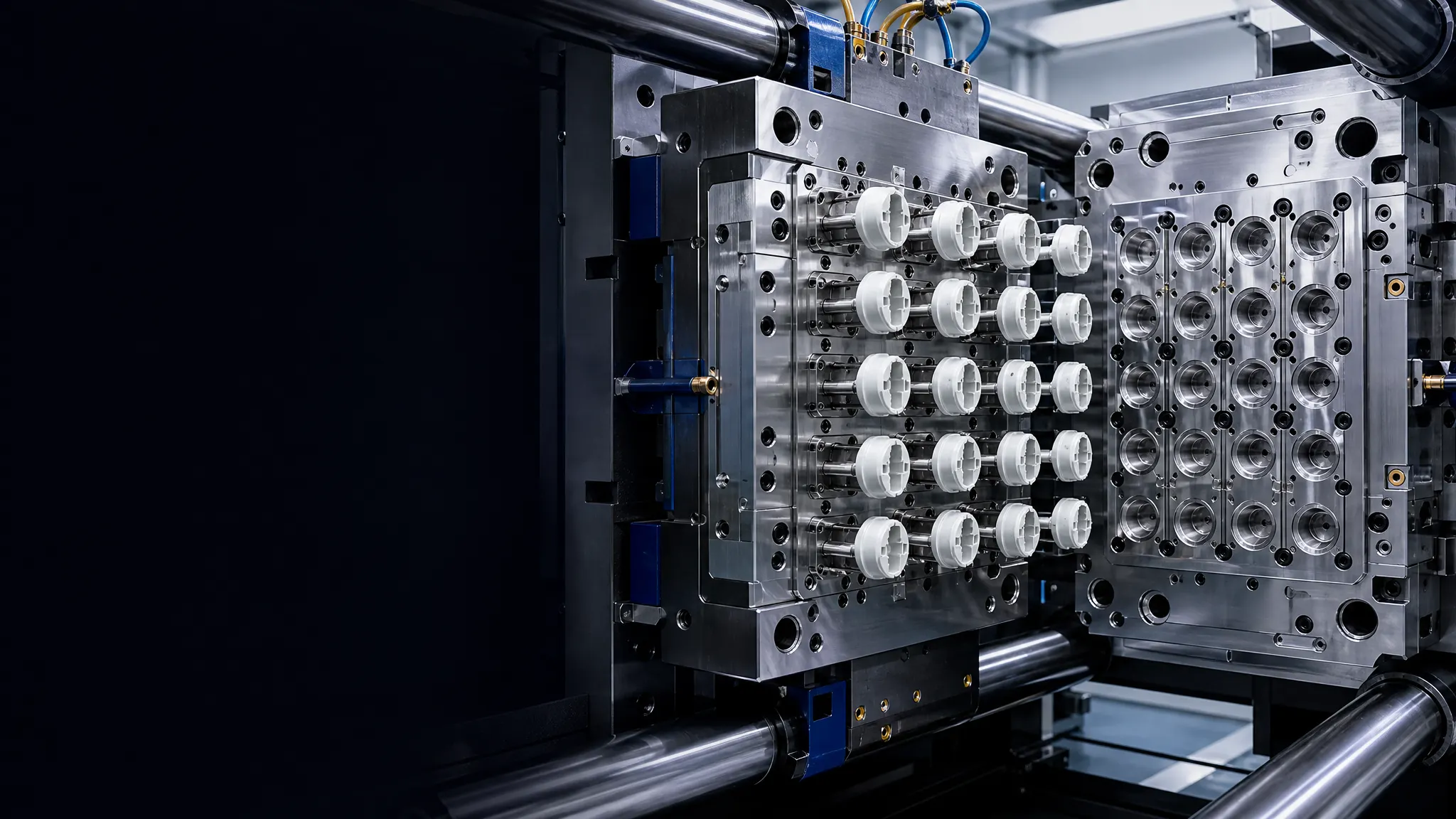
BoValley supports family and multi-cavity injection molding projects designed around part geometry, production volume, and quality requirements. These tooling approaches can help increase output per molding cycle or produce related components within a coordinated mold design.
Certification + Compliance
- ***
- ***
- ***
- ***
- Cavities per Mold
- ***
- Tooling Lead Times
- ***
- Molding Materials
- ***
Overview
What is Family and Multi-Cavity Molding?
Multi-cavity molding uses multiple cavities in one mold to produce several copies of the same part in a single molding cycle. It is commonly considered when production demand justifies a higher-output tooling design.
Family molding uses one mold to produce two or more different but related parts in the same cycle. It can be useful for product assemblies whose components share a material and can be balanced within a common tool design.
Both approaches require careful evaluation of part geometry, cavity layout, filling balance, cooling, shrinkage, ejection, and quality control. Family molds are not suitable for every combination of parts, especially when components require substantially different materials or process conditions.
Family and Multi-Cavity Molding Capabilities
***
***
- ***
- ***
- ***
- ***
***
- ***
- ***
- ***
- ***
***
- ***
- ***
- ***
- ***
***
- ***
- ***
- ***
- ***
***
- ***
- ***
- ***
- ***
***
- ***
- ***
- ***
- ***
 Materials
Family and Multi-Cavity Molding Materials
Material selection should follow the product's mechanical, thermal, chemical, appearance, and regulatory requirements. A family mold typically requires compatible molding conditions across the parts produced in the same cycle.
- ABS
- Polypropylene (PP)
- Polycarbonate (PC)
- PC/ABS
- PA / Nylon
- POM / Acetal
- ***
- ***
- ***
- ***
- ***
- ***
- ***
- ***
- ***
- ***
- ***
- ***
- ***
- ***
- ***
- ***
- ***
- ***
Surface Finish Options
Standard finish options available for all cavities in a multi-cavity or family tool. Finishes are applied uniformly so every part in the shot matches.
| Parameter | Key Considerations |
|---|---|
| Tooling Type | Multi-cavity mold or family mold |
| Cavity Configuration | Same-part cavities or different related parts |
| Materials | Commonly compatible thermoplastics selected for the part design |
| Part Compatibility | Material, wall thickness, shrinkage, filling, and cooling requirements |
| Mold Layout | Gate locations, runner balance, venting, cooling, and ejection |
| Production Volume | Evaluated against tool cost, cycle time, and demand |
| Quality Planning | Critical dimensions, cavity identification, sampling, and inspection method |
| Tooling Validation | Trial runs and part approval based on agreed requirements |
The Process
How Does Multi-Cavity or Family Molding Work?
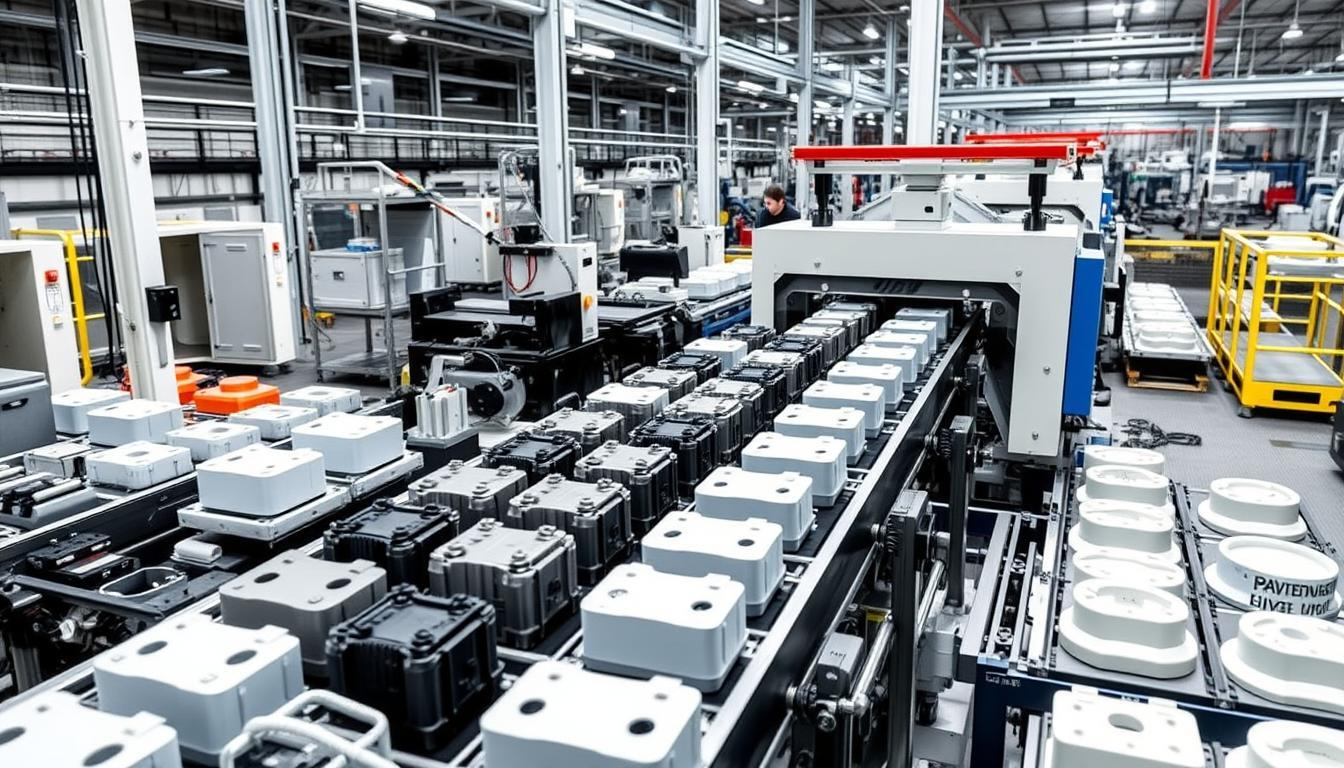
Multi-cavity molds enable the production of multiple versions of the same part in a single shot. Take this process to the next logical step by including many different parts on the same mold — creating a family mold.
The advantages
- Higher Output per Cycle:• Multi-cavity tooling can produce several copies of the same part in one cycle.
- Related Parts Together:• Family tooling may produce compatible components of an assembly in one cycle.
- Production Efficiency:• A suitable cavity layout can improve output when demand and process conditions support it.
The challenges
- Cavity-Level Quality Checks:• Cavity identification and inspection planning help track dimensional differences.
- Tooling Optimization:• Cavity count, runner design, cooling, and ejection can be reviewed together.
 Quality
Applications for Multi-Cavity and Family Molding
These tooling approaches are useful when the expected demand, part design, and molding conditions support producing multiple components in each cycle.
Consumer electronics
housings, covers, and internal components
Automotive
clips, brackets, and interior components
Electrical
connectors selected insulating components
Appliance
knobs covers, and functional parts
Industrial equipment housings
small components
Related components
plastic product assemblies
| Types of Parts | Function |
|---|---|
| *** | *** |
| *** | *** |
| *** | *** |
Ready to Start Your Next Manufacturing Project?
Upload your CAD file today — get a detailed quote with DFM feedback within 24 hours.